This cold weather is here again.
This cold weather is here again.
How many layers do I wear just to go and get a cup of coffee from Starbucks?
Six layers.

This cold weather is here again.
How many layers do I wear just to go and get a cup of coffee from Starbucks?
Six layers.

Scammer: Hello, how are you doing?
Me: Very good. How about you?
Scammer: I’m fine, thanks for asking. how’s your day going so far?
Me: Excellent. Who are you?
Scammer: I’m Susan, from Idaho but currently living in Jacksonville Florida. I’m a registered nurse working with the UN nations overseas.
Facebook suggested you as someone I may know so I viewed your profile and decided to send you a request out of curiosity hoping we could get to know more about ourselves and maybe become friends.
Me: That’s great. Where are you currently working overseas?

This work that I completed in 1980 was stolen from my house in Nigeria around 1994.
If anyone is in possession of it, please know that it is stolen work.
This work and more than fifty masterpieces were stolen from my apartment

It was in 1980, in Nigeria, when this police encounter occurred.
I will start by swearing
in the name of Ogun
that this event, strange
as it sounds, actually happened
in the middle of the night.
They say when you want an African to tell the truth, make the African swear to an indigenous divinity—not to the Bible or the Quran. Those two books are just books. The real book that they believe and consider real is not written. It is oral, and tied to the indigenous divinities.

Artist: Moyo Okediji
Title: The French Medussa
Medium: acrylic on canvas.
Date; 2018
In 1810, the French government launched a bad-ass naval frigate, the Méduse, rigged with 40 guns. The Méduse participated in the Napoleonic wars, and also dabble in marine raids off the coasts of the Caribbean, before departing in 1816 for Senegal on its ill-fated trip for which it became notorious.
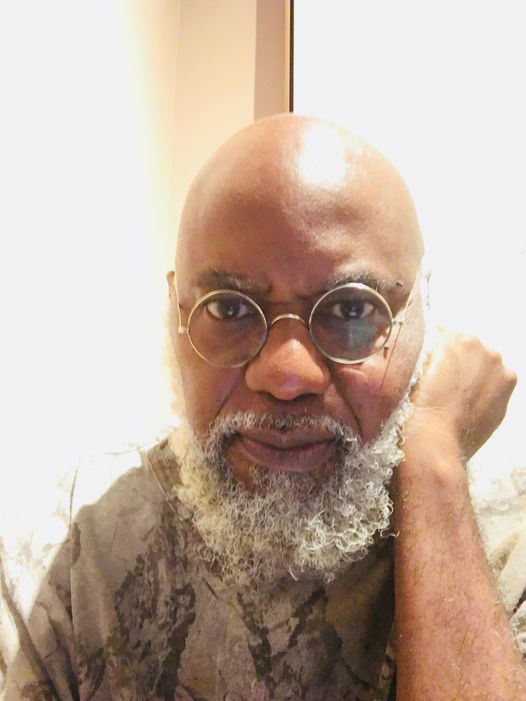
When you walk, you are telling the story of your life with your body language. The way you move your feet tells others who you are if they pay attention to you as you place one foot in front of the other. I did not realize this reality until after my accident, after I could no longer walk on my own two legs, without the use of crutches.

Michael Harris
My brother, Michael Olonade Harris, has transitioned.
This loss is enormous.
He was my inspiration, critic, supporter, strength, teacher, collector, promoter, everything.
I knew.